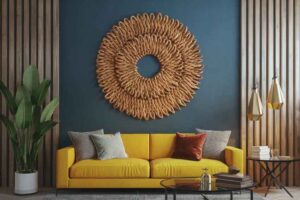
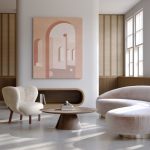
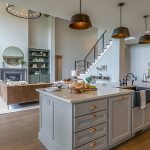
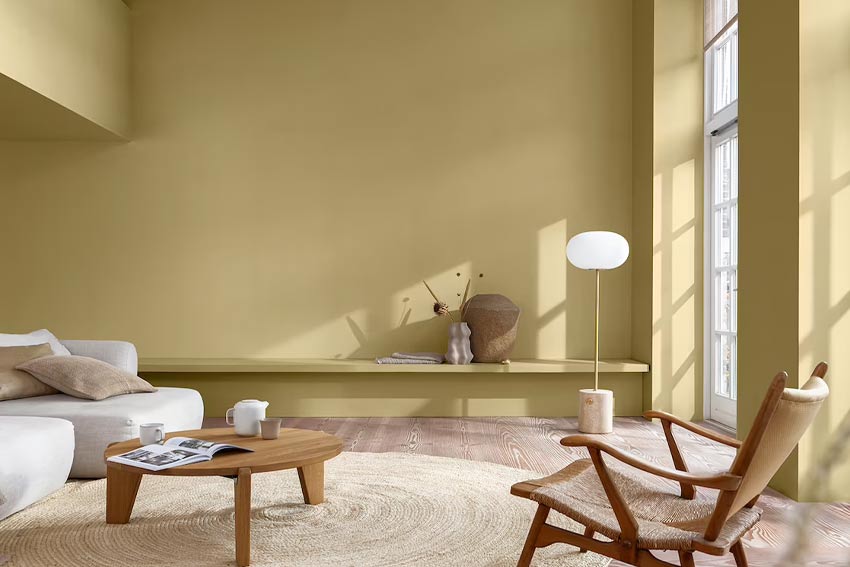
In the world of home decor, few debates are as perennial—and as misunderstood—as the tension between colour and interior design. For many homeowners, there’s a tendency to view colour as the supporting act to furnishings, architectural details, and layout decisions. Others, however, believe colour is the very soul of a space, capable of influencing mood, perception, and ambiance in ways that furniture alone cannot. The truth, as is often the case with design, lies not in choosing one over the other, but in understanding the intricate dance between the two. When balanced thoughtfully, colour and interior elements can work in harmony to create a home that is not just beautiful, but deeply personal and enduringly stylish.
The Psychological Power of Colour
To appreciate the role of colour in home decor, one must first understand its psychological impact. Colours are not merely aesthetic choices—they evoke emotion, influence behaviour, and can dramatically alter the feel of a room. For instance, soft blues and greens tend to soothe the senses, making them ideal for bedrooms and reading nooks. Bold reds and oranges, on the other hand, stimulate energy and conversation, often finding their place in dining areas or creative workspaces.
But beyond individual colours, it’s the relationships between them that hold the most potential. A monochromatic scheme, where various shades of a single colour are layered together, can lend elegance and cohesion. Contrasting palettes, such as navy and brass or terracotta and teal, bring dynamism and drama. Neutral backdrops with bursts of accent colours can feel modern and balanced, while richly saturated walls envelop a space in intimacy and warmth.
Colour, when wielded with intention, becomes more than a backdrop. It sets the tone, anchors the aesthetic, and breathes life into even the most minimalist of interiors.
The Architecture of Interior Elements
While colour speaks to the mood of a space, interior elements give it structure and substance. These are the tangible features—furnishings, layout, texture, lighting, and architectural details—that form the skeleton of your home’s visual narrative. They’re what we touch, sit on, walk across, and interact with on a daily basis.
A well-designed interior considers proportion, balance, and flow. Think of a thoughtfully placed sectional that defines a living area in an open-plan space, or a dining table that invites conversation without overcrowding the room. Materials matter, too—a velvet armchair feels vastly different from a linen one, and each conveys a distinct message of formality, comfort, or casual elegance.
Then there are the details: mouldings, cabinetry, built-ins, and lighting schemes. These elements, while often overlooked in favour of furniture or accessories, provide character and context. A coffered ceiling adds architectural gravitas; a sleek pendant light over the kitchen island can serve as a sculptural focal point.
Without these interior components, colour has nothing to cling to—no stage on which to perform. They are the canvas and structure that give colour its voice.
When Colour Leads
In certain design philosophies, colour takes the lead role. This approach often begins with a statement hue—a bold emerald green, a dusty rose, or a deep charcoal—that dictates subsequent choices in furniture, accessories, and even spatial arrangement. This can be particularly effective in smaller spaces or period homes where colour becomes a storytelling device.
Consider a Victorian townhome with high ceilings and ornate plasterwork. A deep plum or forest green on the walls can enhance the drama of the architecture, bringing out the depth of the woodwork and gilded accents. In more contemporary settings, a statement wall in ultramarine or burnt sienna might direct the eye toward a favourite artwork or piece of designer furniture.
Designers who favour this method use colour as an emotional compass, guiding not just aesthetics, but how the space feels. When done with precision, it creates coherence that doesn’t rely on symmetry or matching pieces—it thrives on atmosphere.
When Interior Elements Lead
Conversely, there are times when the interior layout and furnishings take precedence. In minimalist or Scandinavian-inspired designs, for instance, the form and function of objects are central. Clean lines, natural materials, and neutral palettes allow the design’s architectural purity to shine.
Here, colour often plays a subtle, secondary role—supportive rather than commanding. A pale oak floor, a sculptural leather sofa, and a rough-hewn stone table may coexist in a largely monochrome space, each asserting presence through shape and texture rather than pigment. Accents may arrive in the form of greenery, soft linens, or a single ceramic vase glazed in indigo.
This approach favours restraint and celebrates craftsmanship. It works best in spaces where light and spatial flow are given priority and where the goal is calm, uncluttered elegance.
The Harmony Between the Two
The best interiors—those that linger in memory long after you’ve left them—don’t ask you to choose between colour and interior elements. They integrate both with subtlety and finesse. Perhaps it’s a terracotta wall that perfectly complements the grain of a walnut sideboard. Or an unexpected splash of mustard yellow on a velvet ottoman that enlivens a room of otherwise muted tones.
This is where true artistry lies: in curating a space where colour and design elements are in dialogue rather than competition. A room that feels natural, lived-in, yet undeniably refined.
Creating this balance requires intention. Start by identifying the emotional response you want from the space. Then, let either colour or interior design take the lead, but allow the other to enhance and reinforce that narrative. Use mood boards, fabric swatches, and lighting tests. Take your time. Great design is never rushed.
Conclusion
In the end, asking whether colour or interior elements work best in home decor is a bit like asking whether melody or lyrics make a song great. They are inextricably linked, each bringing something unique and necessary to the composition. Colour offers emotion and energy; interior design provides form and function. It’s only when the two are thoughtfully intertwined that a house becomes more than a place to live—it becomes a place to belong.
Would you like some examples of famous interiors where colour and design elements strike that perfect balance?